
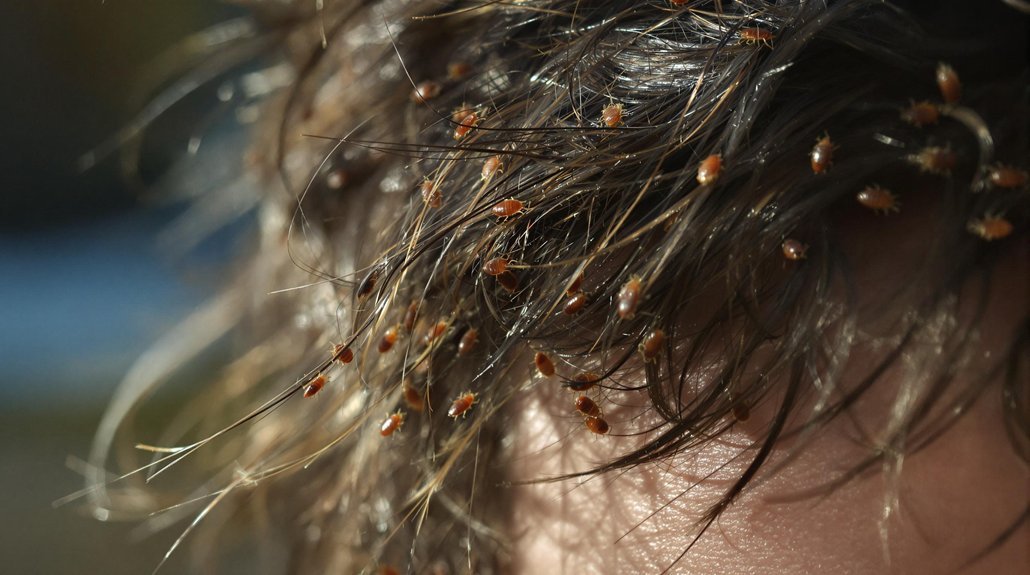
Can Bed Bugs Travel in Your Hair?
If you have found bite marks on your body and you sleep with your hair loose, you may be asking one question again and again: can bed bugs travel in your hair? This fear is very common, especially when someone is already dealing with a bed bug problem at home. In this article, we will answer this question in simple words and explain how bed bugs really behave.
Short Answer: It’s Very Rare
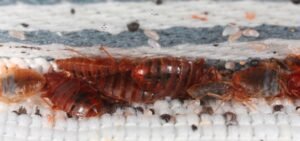
Bed bugs can technically walk through hair, but they almost never choose to live or hide in it. Unlike head lice, bed bugs are not built to grip round hair strands. Their bodies and legs are made for hiding in flat, tight spaces like mattress seams, bed frames, and cracks in furniture — not for holding on to hair.
So, while it is not 100% impossible for a bed bug to crawl across your head for a few seconds, it is extremely unusual for them to stay there or make hair their home.
Why Bed Bugs Avoid Hair
To understand this better, let’s look at why hair is not a good hiding place for bed bugs.
1. Their Body Shape Doesn’t Fit Hair
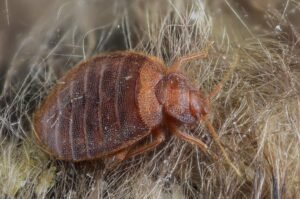
Bed bugs have flat, oval-shaped bodies. This shape helps them slide into narrow gaps like mattress edges or wooden furniture joints. Hair is a messy, uneven surface, and a bed bug’s body is not designed to hold on there for a long time.
2. They Don’t Feed and Hide in the Same Spot
Bed bugs like to feed quickly, usually at night, and then move back to a dark, safe hiding place. Your head and hair are not stable places for hiding because you move around, wash your hair, and change your position while sleeping.
3. They Prefer Fabric and Wood, Not Skin or Hair
Bed bugs are strongly attracted to places like:
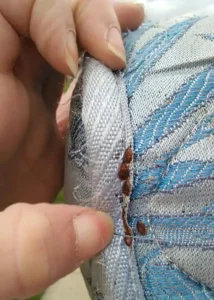
- Mattress seams and box springs
- Bed frames and headboards
- Couch cushions and cracks in furniture
- Baseboards and wall cracks near the bed
These spots give them darkness, safety, and closeness to a sleeping person — something hair simply cannot offer.
What Insects Actually Live in Hair?
Many people confuse bed bugs with other insects that do live in hair. It’s important to know the difference:
- Head lice – small insects that are made to grip hair strands and lay eggs (nits) close to the scalp.
- Ticks – can attach to the scalp for feeding, especially after time spent outdoors.
Bed bugs are very different from both of these. They don’t lay eggs in hair, and they don’t attach themselves to the scalp for feeding.
Where Do Bed Bugs Actually Bite?
Bed bugs usually bite areas of skin that are exposed during sleep, such as:
- Arms and hands
- Neck and shoulders
- Face
- Legs and feet
Bites on the scalp are rare simply because hair makes it harder for bed bugs to reach the skin easily.
Can Bed Bugs Travel on Clothes or Bags Instead?
Yes, this is far more common than hair. Bed bugs are excellent at hiding in and traveling with:
- Suitcases and travel bags
- Clothing folds and seams
- Backpacks and purses
- Second-hand furniture
If you are worried about carrying bed bugs from one place to another, your luggage and clothes are a much bigger risk than your hair.
How to Protect Yourself From Bed Bugs
Here are some simple, practical steps to lower your risk:
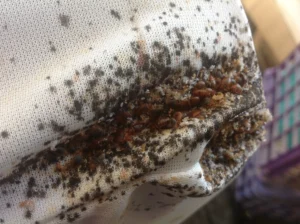
- Check your mattress and bed frame regularly for small brown spots or tiny bugs.
- Wash bedding in hot water at least once a week.
- Avoid placing luggage on the bed after traveling.
- Inspect second-hand furniture carefully before bringing it home.
- Use a mattress cover designed to block bed bugs.
Final Thoughts
To sum it up, bed bugs can technically crawl through your hair, but it is not their natural behavior and it happens very rarely. They are built for hiding in furniture and fabric, not for living on the human body like lice do. If you are dealing with bed bug bites, the real focus should be on checking your mattress, furniture, and bedding rather than worrying about your hair.
Bed Bugs and Hair: Common Questions Answered
How Long Can Bed Bugs Travel in Your Hair?
Bed bugs do not stay in hair for a long time. If one ends up on your head, it will usually try to move off within a few minutes because hair is not a comfortable or safe hiding spot for it. Bed bugs need flat, tight, dark spaces to hide in, and hair strands don’t give them that. Most of the time, a bed bug will crawl through hair only while trying to reach the scalp for a quick bite, then move away to hide somewhere else, like a mattress seam or pillow edge.
What Kills 100% of Bed Bugs?
No single method guarantees removing every bed bug in one try, but a few treatments are known to be highly effective when done correctly:
- Heat treatment – Bed bugs die when exposed to temperatures above 118°F (48°C) for a sustained period. Professional heat treatments can wipe out an entire infestation, including eggs.
- Steam cleaning – High-temperature steam applied directly to mattresses, cracks, and furniture kills bed bugs and their eggs on contact.
- Freezing – Extreme cold (below 0°F / -18°C) for several days can also kill bed bugs, though this is harder to control at home.
- Professional pesticide treatment – Pest control experts use targeted chemical treatments that reach hiding spots regular sprays can’t.
For a full house infestation, a combination of these methods, done by a pest control professional, gives the best results. DIY sprays alone often miss eggs hidden in cracks.
Does Showering Remove Bed Bugs From Your Body?
Showering can wash away a bed bug that happens to be on your skin or hair at that moment, but it will not solve a bed bug problem. Bed bugs don’t live on the human body the way lice do — they bite and then return to their hiding spot, usually your mattress, bed frame, or nearby furniture. So while a shower keeps you clean and may remove a stray bug, the real infestation stays in your bedroom until it is treated directly.
Can Bed Bugs Lay Eggs in Your Head?
No, bed bugs do not lay eggs in hair or on the scalp. They lay their eggs in hidden, protected spots like mattress seams, cracks in furniture, or gaps in walls — places that are safe and undisturbed. Hair moves too much and gets washed too often for bed bugs to use it as a nesting spot. This is one of the biggest differences between bed bugs and head lice, which do lay eggs directly on hair strands.
Will Bed Bugs Go Away If I Don’t Sleep in My Bed?
Not sleeping in your bed will not make bed bugs go away. Bed bugs can survive for several months without feeding, so they will simply wait for their next meal instead of dying off. In fact, avoiding your bed can make the problem worse, because the bed bugs may spread to other areas of your home, like couches, chairs, or other rooms, in search of a new host. The only real way to get rid of them is proper treatment — not avoidance.
How to Remove Bed Bugs From Hair?
If you suspect a bed bug is in your hair, here’s what you can do:
- Comb through your hair with a fine-tooth comb over a light-colored surface or sink to spot and catch any bugs.
- Wash your hair with regular shampoo — this will remove any bed bug that may be present.
- Check your pillow and bedding right away, since that’s the most likely source.
- Inspect your mattress and bed frame for signs of an infestation, such as small dark spots or shed skins.
- Wash your pillowcases and sheets in hot water to kill any bed bugs hiding there.
1 thought on “Can Bed Bugs Travel in Your Hair? Here’s the Truth 2026”