
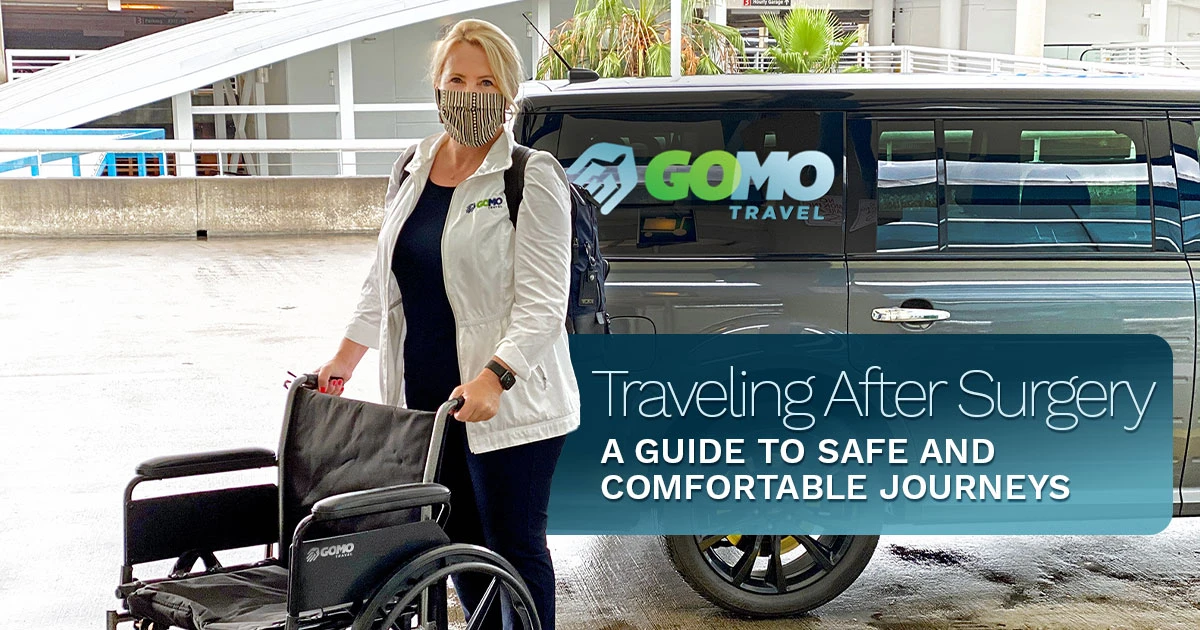
When Can I Travel After Spinal Fusion Surgery?
If you just had spinal fusion surgery, one of the first questions on your mind is probably: “When can I finally go somewhere?” Whether you need to visit family, attend an important event, or just get back to normal life — the wait can feel frustrating.
The honest answer is: it depends. But this guide will walk you through everything you need to know, step by step, so you can plan smartly and travel safely.
What Happens to Your Body After Spinal Fusion?
Spinal fusion is not a minor procedure. Your surgeon permanently joins two or more vertebrae together so that they heal into one solid bone. This process — called fusion — takes real time. Your body needs months to fully complete it.
In the early weeks, your spine is still very fragile. The bones are just beginning to knit together. Any sudden movement, long periods of sitting, or physical stress can slow down that healing — or worse, cause complications.
That is why your surgeon will be strict about travel restrictions in the beginning. It is not about being overly cautious. It is about protecting the work that was done.
General Travel Timeline After Spinal Fusion
Here is a simple breakdown of when most patients can start different types of travel:
Short Car Rides (Local Travel)
Timeline: 2 to 4 weeks after surgery
Short trips around your neighborhood or to a nearby doctor’s appointment are usually fine within the first couple of weeks. The key word here is short. Think 15 to 30 minutes maximum. Sitting in a car for longer than that puts pressure on your lower spine, which is not ideal during early recovery.
Always bring a lumbar support cushion. It makes a noticeable difference in comfort and reduces strain on the surgical area.
Longer Car Trips
Timeline: 4 to 6 weeks after surgery
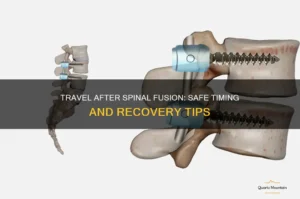
Once you are past the first month, longer car rides become more manageable — but only with the right approach. You should plan to stop every 30 to 45 minutes to get out, stretch your legs, and walk around briefly. Do not push through discomfort just to reach your destination faster.
If you are the one driving, most surgeons will not clear you to drive until you are completely off narcotic pain medication and have enough strength and reaction time to control the vehicle safely. This usually takes 4 to 8 weeks.
Domestic Flights (Short-Haul)
Timeline: 4 to 6 weeks after surgery
Short flights are generally considered safe after about a month, assuming your recovery is going well. However, flying comes with its own set of challenges after spinal surgery. The cabin pressure, the limited legroom, and the inability to move freely all create risks — particularly the risk of blood clots.
Deep vein thrombosis (DVT) is a real concern after any major surgery. Sitting still for hours on a plane slows blood circulation in your legs, which can lead to dangerous clot formation.
To reduce this risk during a flight:
- Get up and walk the aisle every 30 to 60 minutes
- Do ankle circles and calf raises while seated
- Stay well hydrated — avoid alcohol and caffeine
- Wear compression socks if your doctor recommends them
Long-Haul International Flights
Timeline: 6 to 12 weeks, or longer
Long international flights are a different matter entirely. Most spine surgeons recommend waiting at least 6 to 8 weeks before attempting a long flight, and many prefer patients wait 3 months or more. The extended sitting time, the difficulty moving around, and the distance from your medical team all add up to greater risk.
If you absolutely must travel internationally before the 3-month mark, discuss it in detail with your surgeon first. Some patients get clearance earlier with specific precautions in place.
Factors That Affect Your Travel Timeline
No two patients recover at exactly the same pace. Several things will influence how soon your surgeon clears you for travel:
Type of surgery: A minimally invasive single-level fusion typically heals faster than a complex multi-level open fusion. The more vertebrae involved, the longer the recovery.
Your age and overall health: Younger patients in good health often recover faster. Conditions like diabetes, osteoporosis, or obesity can slow healing.
Whether you smoke: Smoking significantly impairs bone fusion. If you smoke, your recovery — including when you can travel — will likely take longer.
How your body is responding: Some people heal faster than expected. Others hit unexpected setbacks. Your surgeon will monitor your progress through follow-up appointments and imaging.
Your pain and mobility levels: If you are still in significant pain or struggling to walk comfortably, you are not ready for travel — regardless of what the calendar says.
Tips for Traveling Comfortably After Spinal Fusion
Once your surgeon clears you for travel, these practical tips will make the experience much easier:
Pack a lumbar support cushion. Bring it everywhere — the car, the airport seat, the airplane seat. It reduces pressure on your lower back significantly.
Request special assistance. If you are flying, do not hesitate to ask for wheelchair assistance at the airport. Walking long terminal distances with luggage is hard on your spine in early recovery.
Book an aisle seat. This gives you the freedom to get up and move without disturbing other passengers. Do not choose a window seat — you will end up staying seated longer than you should.
Travel light. This is not the time to carry a heavy bag. Use a rolling suitcase and ask others for help lifting. Lifting anything heavy is restricted for weeks after surgery.
Plan for rest stops. Whether by car or plane, build extra time into your journey. A 4-hour drive should become a 5.5-hour drive with proper breaks.
Keep your medications accessible. Do not pack pain medication in checked luggage. Keep it in your carry-on bag so it is always within reach.
Know where medical care is available. If traveling to another city or country, have the name and address of a nearby hospital or clinic, just in case.
Warning Signs to Watch For During Travel
Even if you have been cleared for travel, pay close attention to your body. Stop and seek medical help immediately if you experience:
- Sudden increase in back or leg pain
- Swelling, redness, or warmth in one leg (possible blood clot)
- Shortness of breath or chest pain (emergency — call for help immediately)
- Fever above 101°F / 38.3°C
- Numbness or weakness in your legs that is new or worsening
- Fluid or discharge from your surgical incision
These can be signs of complications that need prompt attention.

The Most Important Rule: Ask Your Surgeon
Everything in this article is general guidance. Your surgeon knows your specific case — the number of levels fused, the approach used, your imaging results, and how your healing is progressing. Their clearance is what matters most.
Do not book a flight, plan a long road trip, or make any significant travel decisions without running it by your medical team first. A quick phone call or message through your patient portal can save you from serious setbacks.
Recovery from spinal fusion is a marathon, not a sprint. Give your body the time it needs, travel smart when you do go, and you will be back to exploring the world before you know it.
Final Thoughts
Spinal fusion surgery is a serious procedure with a meaningful recovery period, but it is also one of the most commonly performed and studied spine surgeries in the world. Most patients go on to live full, active lives — traveling, working, and doing the things they love.
The key is patience. Bone fusion takes time that cannot be rushed. Follow your surgeon’s instructions, attend every follow-up appointment, and give your body the recovery it needs. The results, for most people, are well worth it.
FAQS
1. Can you go through airport security with spinal fusion?
Yes. Modern titanium implants rarely trigger metal detectors. Carry a TSA Notification Card just in case, and inform the officer before screening.
2. Can you stay alone after spinal fusion surgery?
Not for the first 2 weeks. You need help getting in/out of bed, bathing, cooking, and managing medications. After week 3–4, most people manage alone.
3. How long is bed rest after spinal surgery?
Strict bed rest is NOT recommended. You start walking within 24 hours of surgery. Short walks increase daily. Full rest between walks for the first 2–4 weeks.
4. What are the permanent restrictions after spinal fusion?
You should permanently avoid heavy lifting (over 20–40 lbs), high-impact sports, and repetitive bending or twisting. Most normal daily activities are fine once healed.
5. How long after spinal fusion can I travel?
Short car rides: 2–4 weeks. Long drives and short flights: 4–6 weeks. International long-haul flights: 6–12 weeks minimum.
6. How risky is spinal fusion surgery?
Success rate is 70–95%. Main risks are infection (1–4%), blood clots, and nerve injury. About 4–5% of patients need reoperation within 3 years. Overall it is a well-established, commonly performed surgery.